
Learning how to draw can be doubtful, it does not seem easy at start.
That’s ok, it is something new.
However, we have been spoon-fed that when we are good at something, it must be natural to be good at this.
This is why so many will give up without really trying.
Let me show you in 4 steps why Innate Talent is a Myth, an illusion.
Art may be seen as a low priority in school, so most students never grew that talent.
But with the right guidance, anyone can learn to start drawing and excel in design sketching. Innate talent is a myth!
Today, let’s learn how to draw by first overcoming the myth of innate talent!
How to Start Drawing? I Don’t Have any Talent!
Familiar with this?
Unfortunately, even though we feel a passion for sketching,
the myth of innate talent is blocking us from our dream goal as aspiring artists or designers.

We limit ourselves out of fear of failure or ridicule.
Thus we never know if we could, in fact, draw anything we’d like. It’s tragic!
We wonder:
- Can anyone learn to draw? Yes.
- How do I start drawing? By learning how to observe first.
Instead of thinking of people with innate talent,
I rather think of how many potential talents have not awakened yet.
Remember, talent is a skill.
It can be learned and acquired by anyone with passion!
All you need to start is to build confidence in yourself.
The Myth of “Innate Talent”
As tiny kids, we didn’t wonder what to draw for so long. we already had our colored pencils in hand,
and we drew the things we loved: our families, our houses, and the sun….
“Yet, we all begin to draw even before we learn to write.”
We were warmly complimented on our “budding talents”,
even if we still held our pencils pretty awkwardly.

Growing up, we keep asking ourselves
if it is easy to learn how to draw.
But we never start thinking we do not have the talent.
We feel fear to start drawing, so we procrastinate.
In reality, there are always existing talents within us that remain unused.
We can express more things through drawing than through our own words,
especially at that age when we are limited by a child’s vocabulary.
“At school, we learned to write and count, work hard, and learn discipline. How much do we learn about drawing?”
Meanwhile, the “art class” was considered recreational; a hobby, and nothing more.
There, we made beautiful scribbles, and we enjoyed ourselves, but we never truly learned to draw.
School education tends to see art and design as a low priority.
School teaching without creativity
We’re immersed in an education system
where literary and scientific knowledge always comes first,
and where our education has little in the way of creative or artistic goals.*
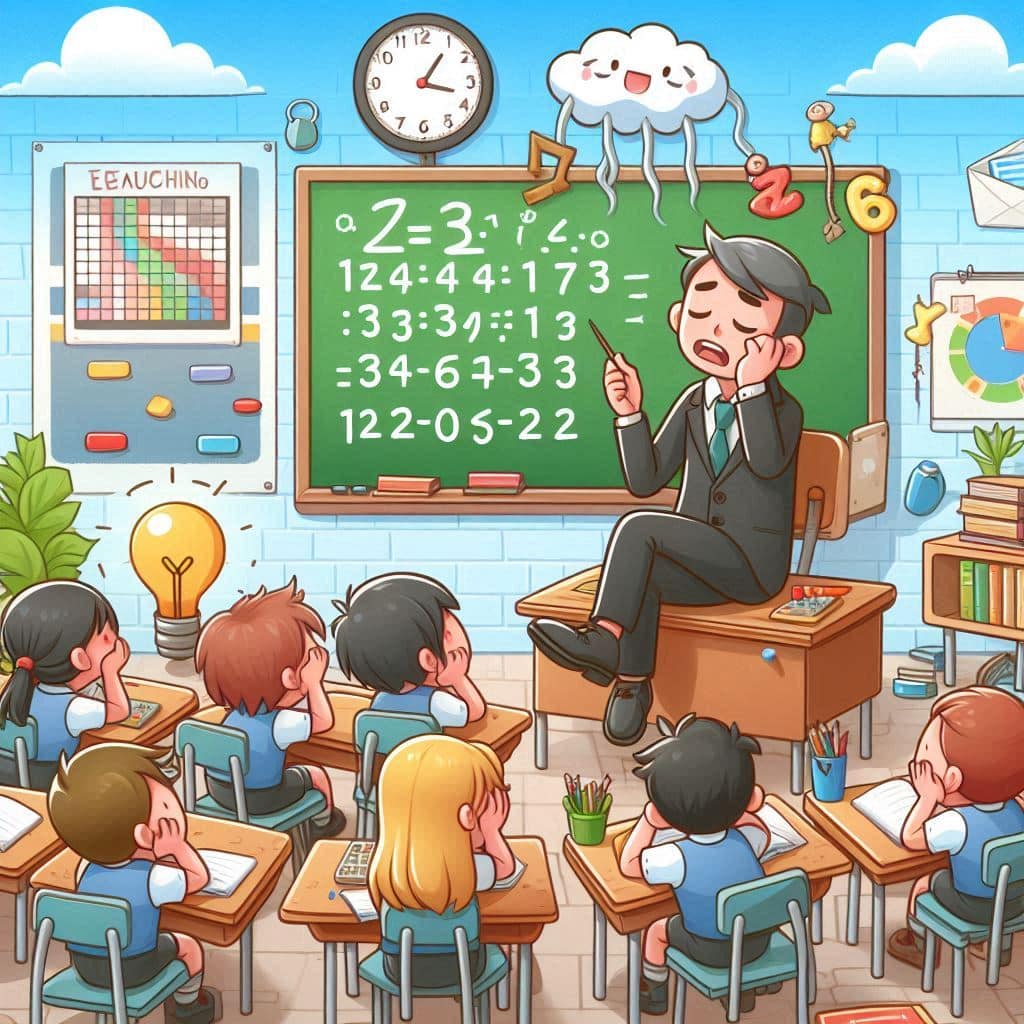
It is this way of thinking that birthed the myth of “innate talent”.
- I don’t mean to say that literature and the sciences are not creative. On the contrary, they can be treasure troves of creativity!
- Still, we learn to summarize novels and memorize poems.
But actually writing books or poems?
Not much more likely than really being taught to draw.
To begin with we’re mostly left to our own devices.
It is completely normal to lose confidence in yourself.
“Think of the pencil as an extension of your hand.”

Your brain, your heart are what give life both to your pen and to your creations.
Your skills matter more than the tools.
As a beginner, your fuel to success is your passion.
- We make blunders, we make attempts, and we just don’t know where to begin.
- We copy; we draw without knowing where we’re going.
Lost, we sometimes buy very expensive and high-quality pencils, paper, or drawing tablets. - In these cases, always remember that the pencil is no more than a tool, plain and simple.
- Whether or not it costs you a lot of money won’t change much when you’re just starting out.
- Think of the pencil as an extension of your hand.
- It’s up to you to decide what it does.
STEP 1- Learn to Observe
Observe in Active Mode to Memorize 3D Forms

Your favorite artists may throw together drawings at breakneck speed,
but this is simply thanks to daily training in their capacity for observation and memorization.
Those skills are even more important than learning to master the pencil.
Deconstruct Complex Objects into Lots of Small, Simple Parts.

Simplify an object by isolating multiple parts connected to each other.
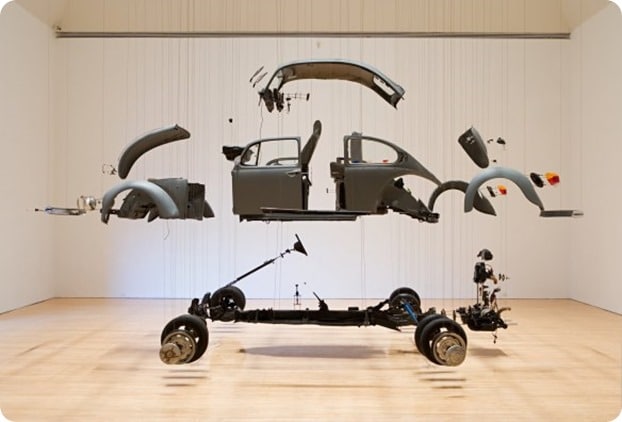
Instead of observing an object globally, observe separately the contours, the light and shadows, the materials, the color and the textures.
STEP 2- Learn the “Drawing Alphabet”
The letters of the alphabet (A, B, C, etc.) find their artistic equivalents in circles, triangles, squares, and rectangles.
If, as a child, you successfully mastered the careful shaping
of the curves and lines that make up each of the 26 letters of the alphabet,
the much simpler shapes of circles or squares shouldn’t pose much of a problem, should they?

Assembling letters into words is the same as forming new, more complex shapes out of these simple ones. They will come to represent an idea or an object; maybe a person.
What does it look like if you place a triangle on top of a square? A simple house – and I’ll let you fill in the chimney and window for yourself. You see, you already know how to draw.
It’s child’s play!
“Knowledge is nothing without practice. Vice Versa.”
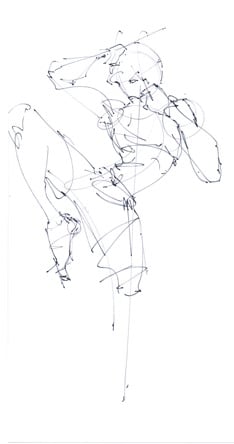 Practice, practice, practice drawing more!
If you sketch daily, your brain and hand will memorize lots of shapes,
from the simple ones to the more complex ones.
You will quickly learn to combine and modify them to create!
20% of the methods will give you 80% of the results.
Most important right now are the essential drawing methods which will help you to improve in leaps and bounds.
These 20% are simple methods that, when put together, allow your drawing to become ever more interesting and/or complex.
STEP 3- Gain Confidence and Speed in Your Drawing
On this blog, you will find some theory, but it will always appear alongside concrete examples that you can immediately put into practice. Expect to be challenged with training exercises of various types and difficulty levels.
The fundamental basics of drawing remain the same for fashion, product design, architecture, animation, and many other fields. It all begins by drawing a straight line freehand.

Firstly I’ll share the standard theories of drawing, then follow that up with sketching exercises designed to sharpen your analytical and observational skills.
And additionally become capable not only of copying what you see but also of creating in your own right.
If you have an unquenchable desire for it,
you will draw anything you want.
The little things make all the difference
Throughout the articles and sketching tutorials on the Design Sketch website, I’ll be giving you basic and advanced tips to help you gain artistic confidence.
Sometimes you may be surprised by the simplicity
of some of these tips and exercises, but don’t underestimate them!
Apply yourself seriously and passionately,
because they’ll have a major role in your future progress and career success as an Industrial Designer.
STEP 4- Get Impassioned

Be passionate about what you do, and you will reach mountaintops!
- You’ll be glued to your chair drawing for hours without noticing the time passes.
- Pocket your pencil and bring it everywhere. It will be your new best friend.
- You’ll draw anywhere; what you find to draw on won’t be important.
- You’ll truly enjoy both learning and having a go at your projects.
- You’ll constantly exceed your limits and expectations.
- You’ll explore new drawing techniques with excitement!
- Discover other domains of art and design such as concept art, fashion design, and shoe design…
What art material do you need?
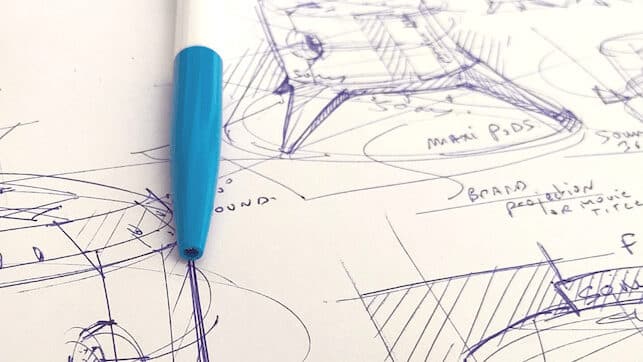
First, let’s see what you don’t need:
I will teach you how to master drawing freehand with confidence and precision.
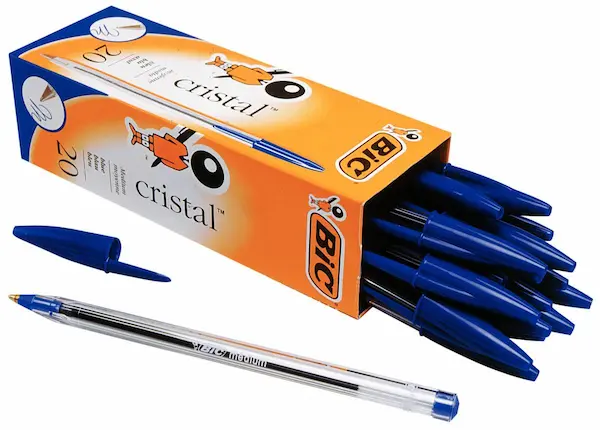
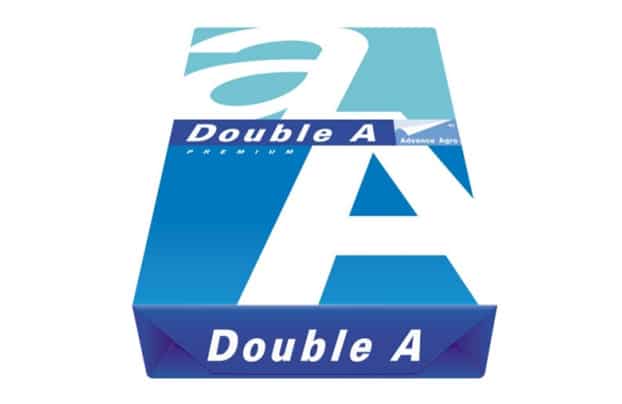
- 1 ballpoint pen (BIC Cristal is a great pen for sketching)
- 500-page pack of laser paper in either size A4 (or A3)
That’s all!
I made an article on what you should know about drawing with a ballpoint pen, such as the pen blot.
The only rule of the game with me is: Do not erase your mistakes.
Either fix your line somehow or begin again. So don’t be a perfectionist!
With this in mind, you are now in the very best condition
to begin learning design sketching with iteration. So, you can progress faster in drawing with confidence.
> Tell me in the comments below what is blocking you from starting to draw.
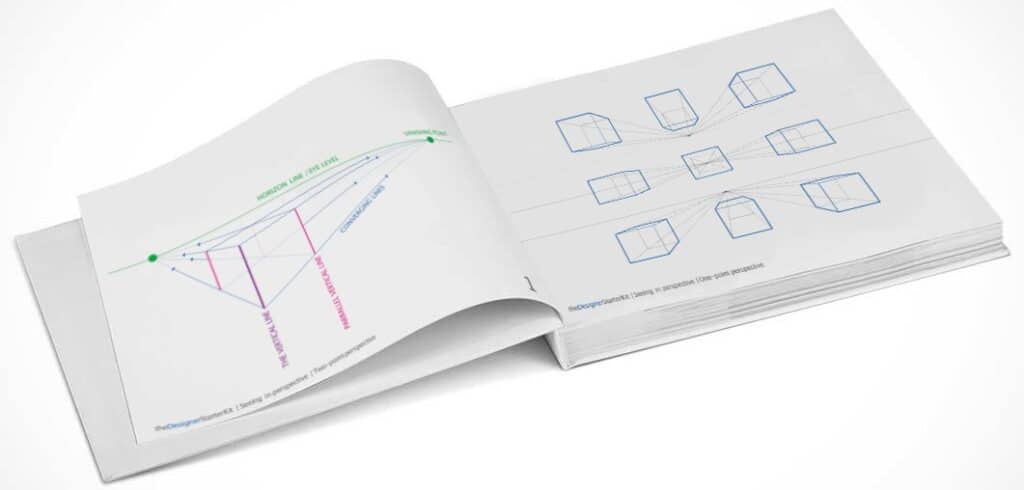
Learn More about Product Design and Creativity






Is the “37 Secrets of Sneaker Designers'” book still available??? I sent for it, got the link to the Dropbox, but the file is deleted. If this site 8s still running and if that book is available I’d love to look through it. I’ve been drawing 20+ years and overtime everyone has to go back to drawing with basics. No matter how good you get, everyone developes bad habits and it’s difficult to remember the basics. This site is great for having those basics set out in a way to follow in steps. Hopefully that link is around somewhere for the secrets of a sneaker designer.
Hi Gino,
Oops! Thanks to you, I realized I forgot to unlock the book delivery.
Let me send you the book in your email. 🙂
Is the “37 Secrets of Sneaker Designers’” book still available??? I sent for it, got the link to the Dropbox, but the file is deleted.
Thank you, Great method’s; and very professional.
Hi, I’m Usman, I’m so glad I found myself here learning with intelligent guys, I’m a beginner but I’m here to learn to be an expert, thanks a lot.
Hi, still didn’t get the book 🙁 I tried several times already – could you please send it to me, I am really curious!
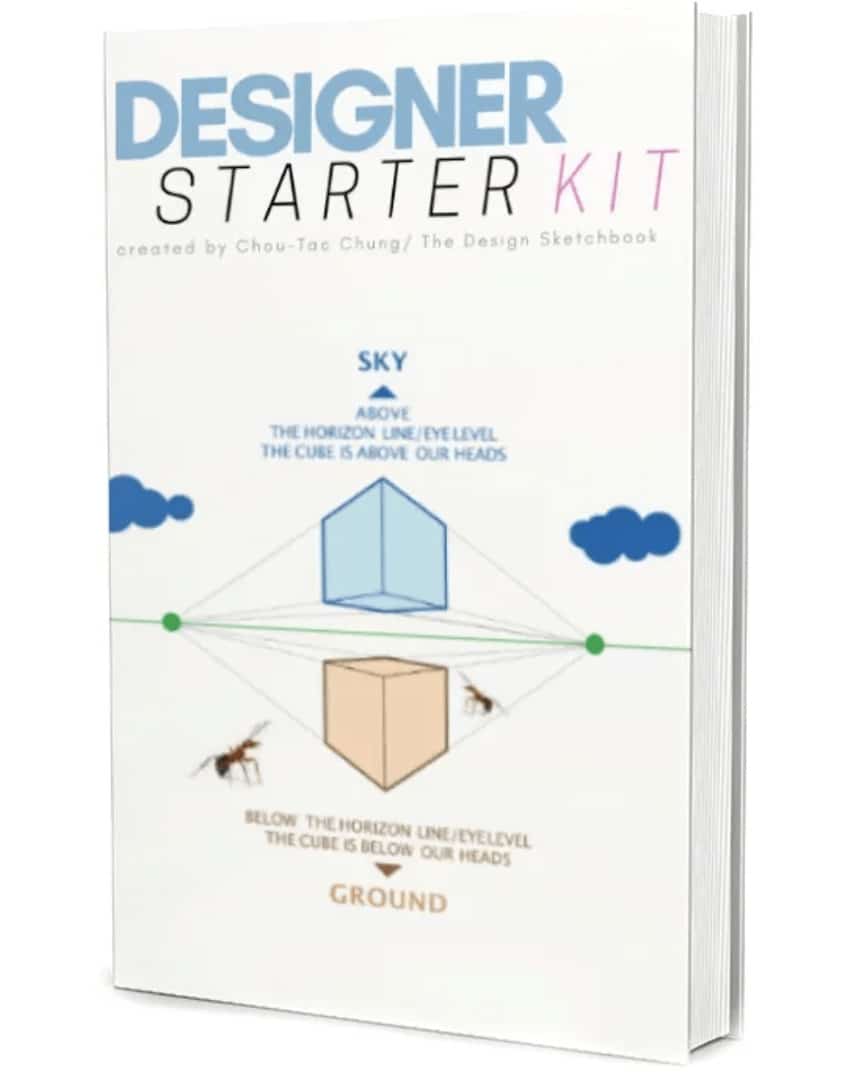
hi can you send me the starter pack . I still didn’t receive even though I have submitted my email id twice .
please help
Hey!! I have not received the starter book…I tried 3 times!! would you please send it to me?
check them in the promotion area of your mail.I too got this problem.
Thank you Santosh for your response. 🙂
Yes, sometimes emails like to play Hide and seek.
You may look at your spam folder or promo if you have a Gmail account.
Then, I recommend you to add my email address in your contact list to receive all the guides in good conditions.
Hi Chou-Tac,
I have not received the starter book.I tried 5 times! would you please send it to me?
Best regard
Hello Mat,
I have sent it to you by email. 🙂
Hello Chou,
I have not receive an email with the book! Please send.
Didn’t receive an email with the book! please send 🙂
hi i still haven’t received my designer starter pack after registering my email address. can you help please?
Sure Jay,
You can now find it in your mailbox 🙂
Hey Chou!,
I wanted to ask you what stationery do you use. What is laser paper and what kind of a BIC pen specifically, ball point etc?
Hello Jask,
You have basically 2 types of paper. Inkjet and Laser paper. They are specific to the type of pri ter you use. Laser printer are often use in office. They print fast and cheap. However they need a big investment.
Inkjet printer are cheaper and slow. Anyway, laser paper are smoother, and your pen and palm will slide on it better. Double A is the brand I like. For the Ball point pen brand, the BIC Crystal is nice.
Hi Chou-Tac,
Would you please send me the designer kit ebook,
I didn’t receive it after subscribing,
Thanks,
Noor
I haven’t received my designer starter pack even after signing up ☹️
Hello Fariha, can you send me an email at choutac@thedesignsketchbook.com ? 🙂
India, want to learn as I want improve visualization and communicate better.
hi i still haven’t received my designer starter pack after registering my email address. can you help please?
Hello David,
Sure please check your email box 🙂
hello, I registered but have not received the book yet? Can you help me? really thank you.
Hi there, I signed up because I sketch a lot but I’m always looking to learn something new, and improve my skill.
Unfortunatley after signing up I didn’t receive anything in my e-mail.
Hope you can fix that.
Thanx
eager to start but still have not received the book in my email..great stuff though..
Email hasn’t come with starter kit
Hi, Im very interested to learn design sketching. However, i still didnt get my copies even after I sign up. Can you help me?
Thank you for sharing your knowledge to us. And thank you for the book,.
Thank you for sharing your knowledge to us. And thank you for the book,.
Email hasn’t come with starter kit.
same here… didnt get the starter kit inbox
Just sent into your email 🙂
your website is very useful to students in india who are preparing design school entrance test.
nidceedhelp is online exam guide to people who are preparing for NID, CEED, UCEED and other design school entrance exam in india.